


What Is The Best Way To Apply Roof Coating?
Every year around November, building owners in Western New York start playing a quiet game of roulette with the elements. We all know how the story goes: the wind picks up off Lake Erie, the lake-effect snow starts piling up by the foot and whatever minor hairline crack you ignored on your flat commercial roof suddenly becomes a direct channel for water into your inventory or workspace. It is a frustrating, recurring headache that leaves many looking for a quick fix before the real freeze sets in. Elastomeric coatings look great on paper but rolling one out without understanding the hidden mechanics of your deck is just throwing money into the wind.
If you want to avoid a complete structural tear-off, figuring out the absolute best way to lay down a protective layer becomes an urgent priority before the ice dams take over.

The Foundation of Coating Application: It is All in the Prep Work
You can buy the most expensive silicone or acrylic compound on the market but if it is sitting on top of trapped moisture, grease or loose gravel, it will peel off like sunburned skin within a single season. The absolute best way to approach this is to stop thinking about the liquid itself and focus entirely on what is happening underneath. Most failures do not happen because the material was bad; they happen because someone rushed the wash phase or skipped a primer that the substrate desperately needed.
Finding reliable roofing contractors in Buffalo makes this process simple because they know exactly where winter ice shifts and how local snow removal crews accidentally nick the membrane during heavy clearing.
Surface Moisture Testing Prevents Interfacial Adhesive Failure
If you trap even a tiny amount of moisture under an impervious membrane, the summer sun will turn that water into vapor, creating massive blisters that tear the seam apart. Running an infrared scan or using a simple handheld moisture meter across the deck reveals the hidden wet spots that look completely dry to the eye.
Choosing Between Acrylic and Silicone Formulations
Acrylic stands up decent to regular UV rays and dries relatively fast but it fails completely under standing water. Silicone, though more expensive, handles ponding water effortlessly and maintains its flexibility when the temperature drops through the floor.
Understanding Manufacturer Substrate Priming Requirements
Certain single-ply membranes like older TPO or weathered EPDM simply will not bond with a fresh liquid coating without a chemical bridge. Skipping the specific primer meant for your exact material ensures the entire layer will delaminate under high winds.
According to data from the National Roofing Contractors Association, over 80 percent of premature liquid membrane failures are directly traced back to improper surface preparation and ignored moisture sub-surfaces rather than material defects.
Proper Equipment Matching Dictates Your Coating Performance
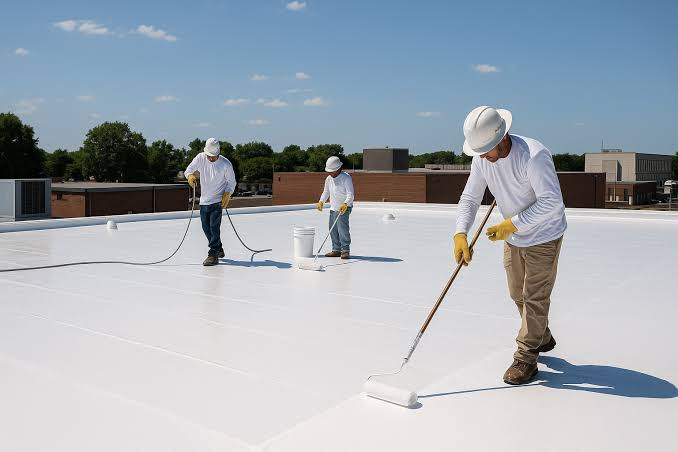
Applying a heavy silicone with a cheap roller is a bad idea. A basic tool from a local store causes uneven thickness. It also leads to an aching back. The material is very thick and unforgiving. It reacts to air humidity the moment it leaves the drum. We often see commercial roofs struggling in Erie County. They suffer from patchy coverage or early cracking. The issue usually comes down to using the wrong gear during installation.
Over the years, I watched specialized crews like Naples Roofing handle large-scale rollouts. Seeing them work makes the value of proper gear obvious. Heavy-duty spray rigs completely change the final outcome. The crews use high-pressure airless sprayers. These machines keep the mil thickness perfectly uniform across thousands of square feet. They avoid the weak, thin spots that rollers create when a technician gets tired.
High-Pressure Airless Sprayer Specifications
A standard paint sprayer will clog instantly on a high-solids roof coating; you need an industrial airless pump capable of pushing at least three gallons per minute through a heavy-duty tip to handle the viscosity.
Roller Nap Adjustments for Textured Substrates
Sometimes high winds make spraying impossible. You risk blowing overspray onto nearby cars. In these cases, you have to use a heavy roller. Choose a deep nap roller for the job. The thick nap forces the liquid into rough spots. It fills the pitted areas of a modified bitumen or built-up roof.
Using Mil Gauges for Consistent Wet Thickness
You cannot guess how thick the coating is by looking at it from a standing position. Technicians must drop a wet mil gauge into the fresh liquid every few minutes to ensure they are hitting the exact thickness required for the warranty.
Environmental Thresholds Control the Chemical Curing Process
You cannot force a chemical compound to cure correctly when the atmospheric conditions are pushing against it. Every liquid coating has a specific window where it wants to transition from a wet state to a durable rubberized sheet and ignoring the local weather report is the fastest way to wash your investment down the storm drain. Working with experienced roof coating services in Buffalo teaches you to respect the humidity shifts and morning dew points that outsiders usually overlook. If the air is too damp, water-based coatings cannot evaporate, meaning the material stays wet and vulnerable for days.
Watching the Ambient and Dew Point Spreads
The surface temperature of the roof must be safe. It needs to be at least five degrees higher than the current dew point. This temperature gap stops microscopic condensation. Without it, moisture forms between the deck and your fresh coating.
Avoid Midday Application to Prevent Pinholing
Applying liquid membranes under a scorching afternoon sun causes the top skin to dry instantly. The solvent underneath still tries to escape. This entrapment creates tiny pop blisters or pinholes. These tiny holes eventually leak water.
Evaluating Wind Speeds for Safe Spray Trajectories
High winds do more than just carry overspray onto civilian vehicles downwind; they dry out the atomized spray path before it hits the roof surface, ruining the chemical bond.
Long-Term Maintenance Preserves Your Restored Commercial Roof Deck
The job is not over once the coating cures. A coated roof is an ongoing system. It needs regular inspections. You must clear debris and check the drains. Catching physical punctures early stops damage to the underlying structure.
I talked with a building supervisor last month. He stretched his roof life an extra twelve years. He did this simply by scheduling semi-annual walk-throughs. The inspections allowed him to patch small mechanical scrapes early. This easy habit protects your initial investment.
Final Review of Strategic Coating Selection and Execution
Material Type | Ponding Water Resistance | Average Lifespan | Best Application Method |
High-Solids Silicone | Excellent (Handles standing water) | 15 to 20 Years | Heavy-duty airless spray rig |
Acrylic Elastomeric | Poor (Softens under standing pools) | 7 to 10 Years | Medium spray or heavy roller |
Polyurethane Coating | Good (High foot-traffic resistance) | 10 to 15 Years | Dedicated airless spray system |
To Conclude
Ultimately, getting a liquid membrane to last through decades of brutal seasonal shifts comes down to patience and precision during those initial hours of application. Rushing the cleaning or misjudging the autumn humidity will always catch up to you when the lake-effect storms arrive. Taking a slow, measured approach ensures the building stays completely dry underneath. Investing the proper time into a flawless application process with professional roof coating buffalo ny keeps your commercial facility protected, dry and running smoothly regardless of what the local weather forecast throws your way.


Comments