


Roof Coatings Explained: When They Work and When They Don’t
Every spring around Western New York property managers start walking flat roofs after the snow melt noticing tired EPDM brittle seams or cracked modified bitumen. The immediate reaction usually swings straight to an expensive noisy complete tear off until someone brings up liquid applied membranes. Coatings get pitched as a silver bullet for every aging deck which causes plenty of frustration down the road. After comparing dozens of commercial decks evaluating options for roof coating services in Buffalo and seeing what actually survives our winters knowing where these materials succeed and where they fail comes down to understanding basic structural integrity versus surface protection.
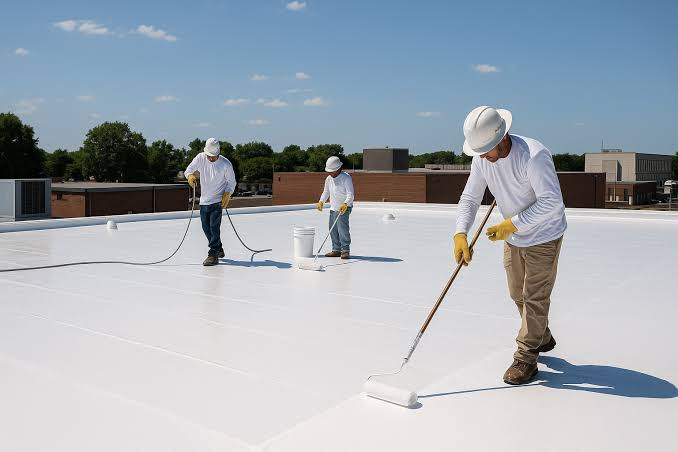
Understanding Fluid Systems Before Applying A Commercial Roof Coating In Niagara Falls Ny
Walk onto any low slope deck around Erie or Niagara County during early spring and you see the exact same brutal cycle playing out over and over: freeze thaw expanding small micro fissures all winter followed by standing water throughout heavy spring rains. Standard acrylic coatings handle solar radiation fine in milder climates but they crumble quickly under constant ponding water. Acrylic relies on pure evaporation to cure properly and prolonged water contact breaks down its chemical bonds turning the coating soft and chalky. Silicone on the other hand is inorganic and naturally moisture curing. It stands up to standing water for weeks without delaminating blistering or losing its bond to the underlying substrate.
Surface Preparation Dictates Long Term Performance
You cannot spray a liquid membrane onto a filthy oily or wet substrate and expect a decade of reliable performance. Adhesion tests on existing cap sheets are non negotiable before ordering material. Infrared moisture scans reveal wet insulation tucked underneath seemingly dry top layers; slathering silicone over damp insulation traps moisture inside the assembly turning a simple surface fix into a rotting structural headache. When we looked at a warehouse site near the river last autumn the previous crew sprayed right over saturated board. We had to strip the entire section down to the metal deck. Proper power washing replacing saturated insulation sections and applying specialized primers consume most of the labor budget but skipping those tedious steps guarantees total system failure within two seasons.
Evaluating Structural Decay Over Surface Wear
Coatings add protective wearing layers and UV defense. They do not add structural strength.
If metal decking feels spongy underfoot, a spray application is just an expensive band-aid. The same applies if modified bitumen seams are completely separated across large spans. Industry figures show restored roofs cost roughly 30% to 50% of full tear-offs. That sounds amazing on budget reports. Yet, applying coatings to failed decking wastes money every time.
The ideal candidate is an aging roof near the end of its warranty. It should show light surface weathering, tight seams, and under 10% wet insulation in core samples. Our team often sees building owners save thousands by catching decks at this exact window. It is much better than waiting until structural rust takes over.
Coating Type | Best Use Case | Standing Water Tolerance | Thermal Reflectivity | Avg. Material Cost per Sq. Ft. |
Silicone | Flat / Low Slope Roofs | High (Resists ponding) | Excellent (80%+) | $4.00 – $7.00 |
Acrylic | Sloped Roofs / Mild Climates | Very Low (Degrades quickly) | Good (70%+) | $2.00 – $4.00 |
Polyurethane | High Foot Traffic Decks | Moderate | Fair (60%+) | $3.00 – $6.00 |
Navigating Application Window Challenges In Cold Weather Markets
Timing a fluid applied coating project in Western New York requires watching weather windows like a hawk. Relative humidity dew point and ambient surface temperatures dictate whether a liquid membrane cures into a seamless protective blanket or turns into a peeling mess. When working with local teams like commercial roof coating niagara falls, ny specialists everyone knows that applying coatings when surface temperatures drop below 40 degrees Fahrenheit causes curing delays making fresh coatings vulnerable to evening frost or unexpected rainfall. Spray crews must track daily dew points continuously ensuring substrates stay completely dry throughout the cure window.
Field Note: Never rush an application right before a cold front moves through. A single night of heavy frost on an uncured liquid membrane destroys chemical cross linking forcing costly scrape offs and complete re applications.
Balancing Upfront Restoration Investments Against Long Term Energy Savings
High-solids silicone membranes offer substantial energy savings. They bounce solar heat away from dark roof surfaces during warm summer months. White reflective surfaces drop roof temperatures drastically. This lowers cooling loads on rooftop HVAC units and cuts monthly energy bills for commercial facilities.
Material costs for quality silicone run higher than traditional asphalt patching. However, lower energy consumption and extended warranty coverage create a solid return on investment over a ten to fifteen-year window.
Common Mistakes During Seam Prep And Perimeter Details
Focusing solely on field areas while neglecting parapet walls, roof penetrations, and expansion joints remains a primary reason restored systems leak prematurely. Liquid membranes move with building expansion and contraction. However, high-stress seams require reinforced fabric mesh embedded directly into three-course fluid applications. Skimping on flashing details near HVAC curbs or edge metals creates weak links. Eventually, wind-driven rain forces its way under the new membrane.
Flashing Reinforcement: Embedding polyester fabric into fluid coatings at all roof penetrations and high movement transitions.
Adhesion Verification: Performing pull off field tests across different roof sections to verify proper chemical bonding before full coating application.
Drain Clearance: Keeping fluid coatings clear of internal drain strainers and scuppers to prevent standing water backup during heavy storm events.
Final Thoughts
Liquid membranes offer an incredible way to stretch facility maintenance budgets, lower building thermal loads and push back expensive complete replacement projects by 10 to 15 years. Finding the right roof coating buffalo ny approach depends on honest core sampling strict moisture testing beforehand and matching the right polymer to local winter weather realities. Ignoring underlying deck health for a quick spray patch always costs far more money down the line.


Comments